

A budget for moving from the UAE to New Zealand depends on where you settle and whether you include rent: living costs vary across New Zealand, so a national average won’t tell the whole story. Compare housing and everyday expenses together before deciding where to live.
It’s natural to focus on the headline cost of living, but your destination, household needs and lifestyle determine what your monthly budget will cover. A place that suits your work and family plans may call for a different spending plan from another part of the country.
This guide explains how to compare costs between the UAE and New Zealand, including housing and regular household expenses, and what to research before choosing where to settle. It also covers practical considerations such as work and visa options, taxes, pensions and healthcare eligibility, helping you build a clearer picture of the move and plan the transition carefully.
Key Takeaways
- Compare housing and everyday expenses in your potential destination, since living costs vary across New Zealand.
- Weigh city size and lifestyle alongside work and housing plans when narrowing down where to settle.
- Prepare for visa-related document, police certificate and medical-check requirements as part of your relocation planning.
- Consider how New Zealand’s customs rules may affect the household goods and other belongings you plan to ship.
- Understand how income tax, pension arrangements and healthcare eligibility may affect your finances after arrival.
Researching a move to New Zealand
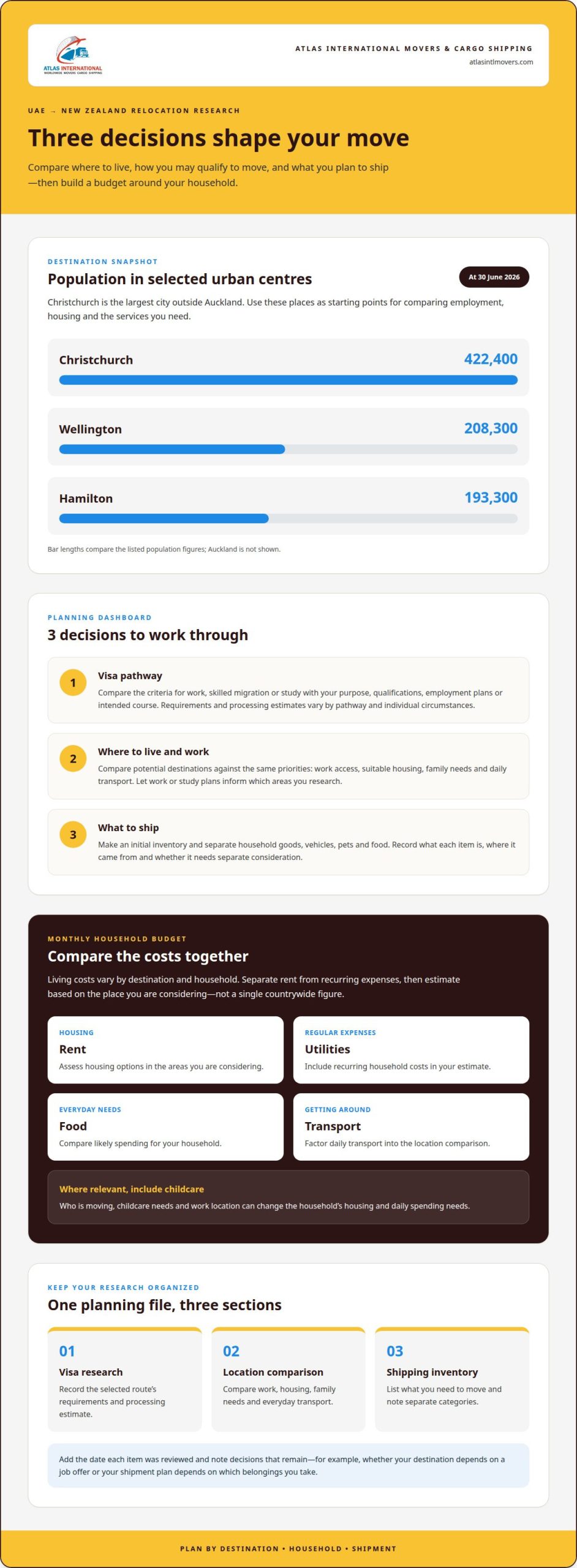
Plan the move around three decisions: which visa pathway fits, where you could live and work, and what you intend to ship. Each decision shapes a different part of your preparation.
Visa Pathways and Eligibility
A visa pathway sets the basis for living in New Zealand, such as work, skilled migration or study. Eligibility evidence and processing estimates vary by pathway and individual circumstances. Compare each option’s criteria with your purpose, qualifications, employment plans or intended course. Keep a record of the requirements and processing estimate for the route you select.
Customs Rules for Household Goods
Research how New Zealand treats each category of belongings you plan to bring from the UAE. Household goods, vehicles, pets and food are distinct categories, not one general shipment. Make an inventory and separate these categories before planning transport. Note what each item is, where it came from and whether it needs separate consideration.
Start with your intended lifestyle and work location rather than choosing a place based on its name alone. List your priorities, such as access to work, suitable housing, family needs and daily transport. Then compare potential destinations against the same list. This makes differences easier to assess and keeps a scenic preference from overshadowing practical requirements.
New Zealand’s population is concentrated in several urban centres, but city size alone doesn’t determine whether a location suits you. Christchurch is the largest city outside Auckland, reaching 422,400 people at 30 June 2026, followed by Wellington (208,300) and Hamilton (193,300), according to Stats NZ. Use those places as starting points for comparing employment, housing and the services you need.
Next, build a household budget around the place you are considering. Separate rent from recurring expenses, then include utilities, food, transport and childcare where relevant. Living costs vary depending on where you are coming from and which part of New Zealand you choose. Compare your household’s likely circumstances rather than relying on a single countrywide figure.
A single person and a family with children, for example, will have different housing and daily spending needs. Write down who is moving, whether anyone needs childcare and whether your work plans require a particular location. A family may weigh school and childcare access differently from a student planning around a campus. These considerations can help turn broad research into a shortlist.
Work plans and housing research should inform each other. Note where your intended work or study could take place, then compare housing options nearby and in other suitable areas. If a role requires you to be in a particular city, that may narrow your choices. If your plans allow flexibility, comparing several locations can give you a broader view.
Keep a simple planning file with separate sections for visa research, location comparisons and your shipping inventory. Add the date you reviewed each item and note which decisions remain. For example, record whether your preferred destination depends on a job offer or whether your shipment plan depends on which belongings you take. This makes moving from UAE to New Zealand easier to plan in manageable steps.
Transport planning belongs alongside destination research, not after every other decision is made. An international moving plan can be considered once you have a clearer destination and an initial inventory. Keep the list focused on what you need to move, rather than assuming every household item should travel. That distinction helps you prepare a more useful relocation plan.
What documents, police certificates, and medical checks are required when moving from the UAE to New Zealand?
The documents required for a New Zealand visa application depend on the pathway and the applicant’s circumstances. Use Immigration New Zealand’s requirements to determine which evidence applies. A work applicant, student and family member may need different supporting records. Follow the checklist for the specific visa rather than relying on a general relocation list.
Start with the visa application checklist
First, identify the visa pathway you intend to use. Then organise the documents requested for that application, keeping each person’s records separate. A family moving together should not assume one applicant’s checklist covers everyone. The application type and each person’s role determine what evidence to prepare.
Identity documents are a practical starting point for your file. Keep the passport details used in the application consistent across supporting records. If a name appears differently on a qualification or civil document, note the difference and prepare any explanation or record requested by the application. Consistent details make it easier to assemble a clear file.
For work or skilled pathways, gather evidence relevant to your employment and qualifications. This may include records of your role, study history or professional background when requested by the application. A student applicant should organise materials related to the intended course. Use the application checklist to distinguish required evidence from documents that merely seem useful.
Police certificates and medical evidence
Police certificates and medical checks are application-related evidence, not requirements that automatically apply to every applicant. Review the instructions for your selected visa and each family member’s application. If a police certificate or medical document is requested, follow the specified format and submission instructions. Keep copies with the relevant applicant’s records.
For medical evidence, follow the instructions for the particular application to understand what is requested and how to provide it. Don’t substitute an unrelated medical record for a document named in the checklist. Apply the same care to police certificates: match the document to the applicant and application, and keep a record of what you submit.
Build a document tracker with one line per applicant and a column for each requested item. Mark whether each item is gathered, being arranged or submitted. For example, a family file might separate the principal applicant’s employment evidence from a child’s identity records. This simple system helps prevent one person’s paperwork from being mistaken for another’s.
Keep digital copies in clearly named folders, with access limited to the people handling the application. Use filenames that identify the applicant and document type, such as “Applicant – passport” or “Student – course evidence.” Store originals separately from working copies, and note where each original is held. This makes it easier to locate a record if the application process requires it.
Prepare the visa file before finalising shipment dates. If your household belongings will travel separately, organise the paperwork and inventory as distinct workstreams. A clear international moving plan can help coordinate the belongings you intend to send with your wider relocation schedule, without confusing shipping records with immigration documents.
What are New Zealand customs rules for shipping household goods, vehicles, pets, and food from the UAE?
New Zealand assesses imported items by category, so a household shipment needs more than a general packing list. Separate household goods, vehicles, pets and food, then identify the details needed to assess each group. An item’s description, condition, origin and intended use can affect what information is relevant. Organise these details before finalising shipment plans.
Household goods: create an itemised inventory
Prepare an inventory that clearly describes each item instead of listing only “boxes” or “personal effects.” For example, record kitchenware, clothing, furniture and outdoor equipment separately. Note whether an item is new or used, and describe its condition. This gives you a clearer basis for reviewing how individual belongings may be treated on import.
Pay special attention to items used outdoors or around soil, plants or animals. Examples include camping equipment, garden tools and sports gear. Clean and inspect these belongings before packing, and identify them clearly in your inventory. A precise description helps distinguish ordinary household contents from items that may need closer consideration.
Vehicles: keep vehicle details separate
A vehicle is different from furniture or personal belongings. Record its make, model, year, vehicle identification details and ownership information in a separate file. Keep purchase or registration records together so the vehicle can be assessed as its own import category. Don’t assume a vehicle is treated the same way as household effects.
List accessories, spare parts and equipment separately from the vehicle itself. For example, tools packed in the boot should also appear in the goods inventory. Separating these details makes it easier to identify what relates to the vehicle and what relates to other items. Include the vehicle’s condition and history in your records. If you decide to sell your vehicle before moving rather than shipping it, temporary transport from providers like Mirage Rent a Car can bridge the gap while you wrap up affairs in the UAE.
Pets: plan animal-specific requirements
Pets require a separate import assessment from household cargo. Record each animal’s species, country of origin, identification details and travel history. Keep veterinary records together, including documents describing vaccinations or treatments. These details help establish which requirements apply to the animal and support an organised preparation timeline.
For example, don’t treat a dog and a cat as interchangeable entries on a shipping list. Create an individual record for each pet and keep its paperwork accessible. Plan each animal’s travel separately from boxes and furniture, since preparation involves animal-specific documentation and care.
Food: identify products precisely
List food items by product and ingredient rather than using broad labels such as “snacks” or “pantry goods.” A sealed packet, a homemade product and a dried ingredient are different examples, and their contents and packaging matter when assessing import treatment. Keep food out of general carton descriptions so it can be reviewed separately.
Before packing food from the UAE, note its country of origin, ingredients, packaging and whether it is commercially prepared. Don’t assume sealed packaging alone determines whether an item may be brought in. A precise product description gives you a practical basis for evaluating each item and deciding whether to include it in the shipment.
For a shipment containing all four categories, maintain separate lists and records for household goods, vehicle, pet and food. Match every carton or item to its description, and group supporting documents by category. This makes the contents easier to review and helps avoid confusion between belongings with different import considerations. Finalise the inventory before packing so the records reflect what will actually travel from the UAE.
How do taxes, pensions, and healthcare coverage work for new arrivals from the UAE?
Income tax, pension arrangements and healthcare eligibility affect different parts of a relocation budget. If your household is arriving from the UAE, assess each separately: identify expected New Zealand income, document existing pension arrangements and establish which healthcare eligibility category applies.
Income tax: plan around income
New Zealand uses a tiered income tax system, with rates varying by income level. This means the tax calculation depends on income, rather than one rate applying to everyone. Include expected earnings in your budget and distinguish salary from other income sources. Don’t estimate take-home pay using a single assumed rate.
Before accepting a job, note the expected salary, payment frequency and any other income you anticipate receiving. These figures help you create a realistic household cash-flow plan. For example, compare expected pay with rent, utilities and regular costs, and account for tax deductions. Keep employment and income records together as your circumstances change.
If you have income connected to more than one country, keep the related records separate. A folder for New Zealand employment documents and another for UAE income records can make them easier to organise. Your income sources and personal circumstances matter when understanding tax obligations, so don’t treat another new arrival’s situation as a direct template.
Pensions: preserve your records
Review any pension or retirement arrangements connected to your UAE employment before leaving. Collect account statements, employer documents and information about contributions or benefits. Keep the administrator’s contact details with those records. This gives you a clear reference when considering how your existing arrangements relate to your plans in New Zealand.
Don’t assume that a pension automatically transfers when you move countries. Instead, list each account or benefit separately and record who administers it. For example, an employer-linked arrangement and a personal retirement account should have distinct entries. This helps you track the source, terms and relevant paperwork without confusing one arrangement with another.
Include pension documents in your long-term financial file, not just your immediate moving paperwork. Store copies of statements and correspondence securely, and note any questions about contributions, access or future payments. A clear record can help you discuss your circumstances with the relevant administrator or a qualified adviser without overlooking an account.
Healthcare: understand eligibility
New Zealand public healthcare covers citizens, permanent residents and some work visa holders. Some work visa holders qualify after being in the country for at least 2 years. Eligibility therefore depends on immigration status and, for some work visa holders, time in New Zealand. Don’t assume that every visa provides the same access.
Use your visa category and arrival date to organise healthcare planning. Keep a copy of your visa records alongside relevant arrival information. For example, a permanent resident and a person holding a work visa may fall into different eligibility categories. These details help you identify which category applies to your situation.
For a household, consider each person’s status separately. A partner or dependent may not share the principal applicant’s visa category. Record each family member’s immigration status and relevant dates, then use that information when planning healthcare access. This avoids treating the household as one case when individual circumstances may differ.
Bring tax, pension and healthcare records into one relocation file, with separate sections for New Zealand income, UAE pension documents and each family member’s visa details. This keeps financial planning distinct from shipment preparation while helping you manage the practical demands of your move. A structured file also makes important records easier to find after arrival.
Atlas International Movers & Cargo Shipping: International Moving
Atlas International Movers & Cargo Shipping can organise the belongings you plan to take as you prepare for New Zealand. Our international moving service supports the transition of household goods across borders, while air and sea cargo give you shipping options to consider. The right approach depends on what you intend to move and how it fits your relocation plans.
Turn to our team when you have a destination in mind and are ready to discuss your household shipment. A clear inventory and preferred timing will help frame the conversation. We can plan your international move so your belongings travel safely and securely, leaving you more time to focus on settling in.
To discuss your move, visit our international moving page or contact Atlas International Movers & Cargo Shipping.
Shape your next steps with confidence
As you plan moving from the UAE to New Zealand, turn your preferred destination into a practical relocation timeline. Decide which choices need attention first, who in your household will handle each task and what you want settled before departure. A shared plan keeps decisions connected instead of treating the move as a series of unrelated arrangements.
Leave room in that plan for changes. A new job, a different housing choice or an updated family need can affect when other tasks make sense. Reviewing your priorities together helps you adjust while keeping sight of the life you’re preparing to build in New Zealand.
When you’re ready to discuss the belongings you plan to move, Atlas International Movers & Cargo Shipping can help you consider the logistics. Contact Atlas International Movers & Cargo Shipping to discuss your relocation, and take the next step toward a well-planned start.
Frequently Asked Questions
How much does it cost to move from the UAE to New Zealand, including shipping and flights?
There isn’t one fixed total for a household move and flights. Shipment cost depends on the volume of belongings, packing needs and whether air or sea cargo suits the shipment. Airfare is separate and varies with travel dates, route, passenger numbers and baggage. To plan in AED, list these costs separately and request a shipment quote based on your inventory and destination.
What are the cost of living and average rents in Auckland, Wellington, and Christchurch compared with the UAE?
Costs and rents vary by location, property and household, so compare a specific rental and lifestyle budget rather than relying on one countrywide average. For Auckland, Wellington and Christchurch, compare rent, utilities, transport and groceries with equivalent UAE expenses. Use similar home sizes and commuting needs, and keep the currency and budget period consistent. This gives you a more useful comparison for your household.
What are the main risks and practical steps for relocating from the UAE to New Zealand?
The main planning risks are choosing a visa route without matching its evidence requirements, overlooking item-specific shipment considerations and underestimating post-arrival expenses. For moving from the UAE to New Zealand, keep separate files for each traveller, your belongings inventory and financial records. Match your destination to work and housing plans, and organise your shipment timeline around those decisions. This keeps immigration, household and arrival planning coordinated.