

A storage estimate is useful only when you know what it covers. With furniture storage services in the UAE, we recommend asking how the facility handles visits and access before deciding whether the arrangement suits your needs.
We understand that you want to know where your furniture will be kept and how it will be handled. Storage can involve more than space: collection, packing, transport, and redelivery all affect the arrangements and estimate.
In this guide, we explain what furniture storage can include, what affects the cost, and what to provide when requesting an estimate. We also cover planning collection and redelivery, and what to consider when viewing a storage facility. With these details clear, you can plan a more organized transition around your belongings and timeline.
Key Takeaways
- We can help you find out whether you can view a storage facility before booking and what access arrangements apply.
- We can plan how collection, packing, storage and redelivery fit together as one move.
- We can use details about your furniture and storage needs to shape an estimate.
- We recommend cleaning and drying furniture before storage and considering suitable wrapping materials.
- We can help you see how storage supports a move or a temporary need for space, and what to consider before arranging it.
Door-to-door collection, packing, storage and redelivery
We connect collection, packing, transport, storage, and return delivery in a door-to-door arrangement. We recommend starting with an inventory that records each item and its condition. For example, list a dining table, four chairs, and two cartons separately. This gives us and you a clear record of what was collected and what should be returned.
Before collection, we recommend sorting belongings by destination. Keep items needed at your next home separate from furniture going into storage. A bed frame, sofa, or dining set may need protective packing before loading. Clean and dry furniture before storage to help prevent dust accumulation and mold. We do not recommend plastic sheets for wrapping furniture because they can generate moisture.
At the collection address, we use access details to shape the move. Note the entrance, lift or stairs, loading area, and any timing arrangements. An apartment collection may involve carrying furniture through shared corridors, while a villa may offer direct entrance access. Our packing plan should account for the route and each item.
During packing, we group small components with their furniture where practical. Keep table legs and their fittings together, and label cartons by room or contents. Our inventory can record the item, its visible condition, and whether it is packed. For self storage, these records also make redelivery easier for us to organize. Controlled access arrangements are a separate consideration from packing and transport.
We can coordinate collection, packing, moving, and delivery as connected steps. We recommend this useful sequence:
- List the furniture and identify what will be stored.
- Prepare dry items and arrange suitable protection for each piece.
- Record the packed items before they leave the address.
- Plan storage placement and keep the inventory available.
- Arrange redelivery for the address and access conditions at that time.
At redelivery, we use the inventory to guide placement. For example, send the sofa directly to the living room and keep labelled cartons grouped by room. If plans change, the list helps us distinguish stored items from belongings already delivered. Coordinating each stage helps us keep collection and return details aligned, rather than relying on memory.
We treat environmental measures as separate choices. Whether packing materials can be recycled depends on their material and condition; suitable cartons or protective materials can be set aside for reuse. Tree planting is a separate sustainability initiative, not an automatic part of furniture collection, packing, or storage. We recommend reviewing what the service includes without conflating these claims.
Air-conditioned storage facilities
In the UAE, facility conditions matter when your furniture will remain in storage between moves. Air-conditioned storage describes an environmental feature, not a guarantee about every room or unit. We can help you compare the stated conditions and how they’re managed, and confirm which apply to the space assigned to your belongings. A wooden cabinet, upholstered sofa, and boxed household items may have different storage considerations.
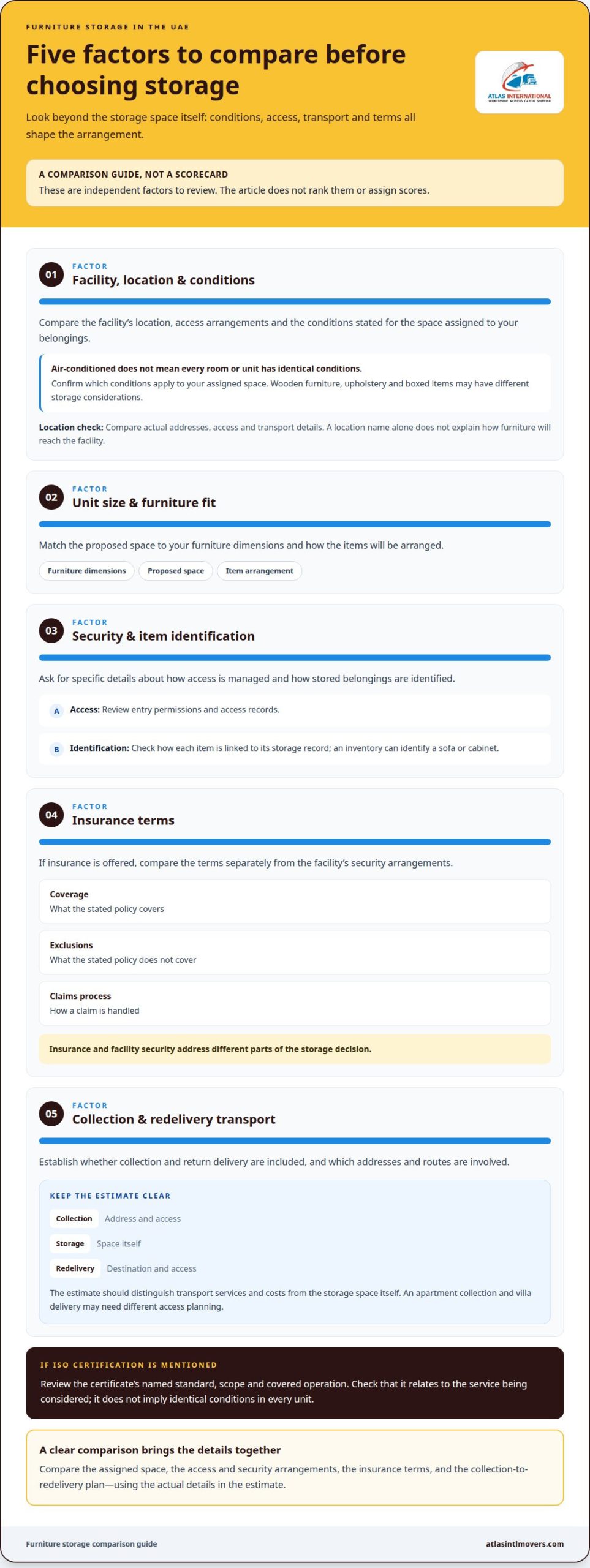
When choosing furniture storage services in the UAE, we help you compare the facility location, unit size, stated conditions, security arrangements, transport, and any insurance terms. If ISO certification is mentioned, we can help you review what it covers. These details help you assess how the proposed arrangement fits your furniture and collection plans.
For storage, the facility’s location can affect collection routes and delivery planning. We can help you compare whether a unit near the collection address may simplify transport or whether a facility elsewhere may suit the eventual delivery destination. Compare the actual addresses, access arrangements, and transport details in the estimate. A location name alone doesn’t explain how furniture will reach the facility.
We recommend comparing security arrangements by looking for specific details about entry permissions, access records, and how stored items are identified. An inventory can link a sofa or cabinet to its storage record. If insurance is offered, we can help you compare the stated coverage, exclusions, and claims process. Insurance terms and facility security address different parts of the decision.
Transport is another point we help you compare. Establish whether collection and return delivery are included, and note the addresses involved. For example, furniture collected from an apartment and later delivered to a villa may require separate access planning. The estimate should distinguish transport costs and services from the storage space itself.
If ISO-certified facilities or units are mentioned, we can help you review the certificate’s named standard, scope, and covered operation. Certification should relate to the service being considered, rather than imply identical conditions in every unit. Compare the certificate details with the facility and storage arrangement described. This keeps the ISO reference specific, not a general promise about all belongings.
- Facilities: Compare location, access arrangements, and the conditions described for your assigned space.
- Unit size: Match the proposed space to furniture dimensions and how items will be arranged.
- Security: Review access controls and item identification alongside the inventory process.
- Insurance: Read coverage terms separately from the facility’s security arrangements.
- Transport: Compare collection and redelivery addresses, routes, and included services.
To review a storage option alongside warehouse arrangements, see storage and warehouse services. We can help you make a clear comparison so you understand how each facility’s conditions, security, and transport plan relate to your furniture.
Can I visit the storage unit before renting?
A viewing can help you assess a storage unit before deciding. We can help arrange a visit and show you the type of space proposed. Check how to enter, where the furniture would be placed, and whether access suits your plans. Seeing the space can clarify practical details that a description alone may not show.
Unit size is usually discussed by floor area, but household capacity depends on furniture dimensions and arrangement. A 10-square-foot space and a 75-square-foot space represent very different amounts of floor area. Neither figure alone tells you whether a sofa, bed frame, or dining table will fit. Measure larger pieces and note whether they can be dismantled before estimating storage space.
Prepare a short inventory before requesting a unit. Include bulky items such as wardrobes and mattresses, as well as smaller pieces you may need to access. Note the dimensions of unusually large furniture and identify items that cannot be stacked. Our storage team can use this information to estimate the required space and plan suitable placement.
- List each large item, such as a sofa, bed, or cabinet.
- Record dimensions for pieces that take up substantial floor space.
- Separate furniture from cartons if both need storage.
- Allow for access to items you may need during storage.
Monthly prices vary with the amount of space and the storage arrangement. In Dubai, the market range for furniture storage depends partly on unit size; a smaller space and a larger household requirement are not comparable quotes. Collection, packing, transport, and the chosen storage period can also affect the estimate. We recommend comparing what each quote includes, rather than judging only by the unit’s floor area.
Flexible storage periods can help when a move-in date changes or renovation work takes longer than planned. Before booking, we recommend establishing the expected start and end dates, and how changes affect the arrangement. For example, someone waiting for a home handover may need storage until delivery can be scheduled. Clear dates make collection and redelivery easier to organize.
A facility visit is also an opportunity to discuss access and placement with our team. Ask how the proposed space will accommodate your inventory, especially if it includes a large sectional sofa or several wardrobes. Check whether you can reach stored items without moving other pieces. These practical details may matter more than choosing a larger unit without a clear plan.
Getting a storage estimate and booking
A useful estimate starts with a clear description of your belongings. List the furniture and cartons, approximate dimensions, collection address, and intended storage period. For example, a three-seat sofa and two wardrobes require different space planning from boxed household items. Include whether you need packing, collection, and redelivery. These details help us ensure the estimate reflects the whole arrangement, not just storage space.
For Dubai storage, we provide estimates to customers requesting quotes, who can expect estimates from around 3-5 companies. Compare the services each estimate includes, not just the proposed unit size. One estimate may cover collection and packing, while another may describe storage only. A simple comparison should record the space, service scope, storage period, transport arrangements, and any optional charges shown.
The price depends on the arrangement and we provide it after a quote request. Key cost factors include the volume of belongings, unit size, packing needs, collection distance, storage period, and redelivery. A temperature-conditioned option may also affect the proposed arrangement. Ask for each included service to be listed separately so you can see what the estimate covers.
Before booking, review the written terms for billing dates, payment timing, and cancellation. They should explain when charges begin, how extensions are handled, and what happens if plans change. For example, a delayed home handover may require a longer storage period. Confirm how revised dates affect billing before accepting a change.
Online booking can be convenient when the form captures the correct inventory, addresses, and requested dates. Review each entry before submitting, especially the collection location and expected storage period. If you pay online, keep the transaction receipt and booking confirmation with our estimate. The confirmation should clearly identify the agreed service and payment.
WhatsApp can help you share an item list or clarify collection details when available. Keep our estimate, revised terms, and booking confirmation together. A message saying “one sofa” may not describe a large sectional accurately, so include its dimensions or a clear description. Written details help our team plan the space and transport.
A useful estimate is specific enough to support a decision. Check that it identifies the belongings, selected space, service steps, billing terms, and permitted booking changes. If a conditioned environment is proposed, make sure the temperature arrangements are clear. Once the details align with your moving dates, we can plan collection and eventual redelivery.
Furniture and personal-item storage
Furniture storage can help during a home renovation, relocation, or change in household arrangements. A dining set may need to be stored during flooring work, while cartons of seasonal belongings can stay in storage between homes. We recommend planning storage around what needs protection and when you’ll need each item again.
Start by separating large furniture from personal items. List a sofa, bed frame, wardrobe, and dining chairs individually, then group smaller belongings by category. For example, label cartons as kitchenware, books, or bedroom items. We recommend keeping a clear inventory to distinguish household essentials from items that can remain in storage throughout the term.
Prepare furniture before storage by cleaning and drying each piece to help prevent dust accumulation and mold. Make sure a wooden table is dry before covering it and upholstered furniture is free from damp fabric. Plastic sheets are not recommended because they can generate moisture. We recommend choosing protective materials suited to each item.
Personal items need their own packing plan. Group fragile pieces, documents, and small accessories separately from bulky furniture. Use clear labels that describe the contents and intended room. A carton marked “bedroom linens,” for instance, is easier to identify than one marked “miscellaneous.” Keep an inventory copy handy to organize redelivery.
During a renovation, store items that would obstruct the work first. Move a dining table, spare chairs, and decorative pieces out of the work area while keeping daily-use belongings accessible. When moving between homes, separate items needed immediately from those that can remain stored. We can help make collection and return planning easier if dates or access arrangements change.
Estimate the required space by considering dimensions and arrangement, not just the number of items. A dismantled bed frame takes up a different footprint from an assembled bed. A sectional sofa may need more floor space than a compact loveseat. Include cartons and items that cannot be stacked in your inventory. This helps us match the space to your belongings instead of relying on guesswork.
For longer storage, group belongings by how often you may need them. Identify frequently used items and furniture that can remain stored until your next address is ready. For example, a household awaiting a handover may need beds and dining furniture returned together, while archived personal items stay stored longer.
A warehouse arrangement works best when the inventory reflects how you’ll use your belongings. Review the list before collection, note which items belong together, and clarify the intended return sequence. We recommend clean, dry furniture, suitable packing, and an organized inventory as a practical foundation for keeping stored belongings in good condition.
Atlas International Movers & Cargo Shipping: Storage & Warehouse
We provide Storage & Warehouse solutions for furniture and household belongings between moves, during renovations, or while a new home is being prepared. Our storage is secure and flexible, with easy access and arrangements shaped around your items and plans.
Share your furniture list, collection and delivery addresses, and expected storage period to define the arrangement. If storage is part of a wider move, Domestic Moving or International Moving can support the transition. Air Cargo is also available for suitable shipping needs.
For an organized next step, contact us to discuss your storage requirements and request an estimate.
Plan the storage around your next move
The next step is to connect your storage plan with what happens afterward. Decide which belongings you’ll need returned first, where they’ll go, and whether storage supports a home transition, renovation, or another change. This makes storage part of your wider moving plan, rather than a separate task to resolve later.
When considering furniture storage services in the UAE, focus on a plan that reflects your priorities and timing. A clear inventory and intended destination can guide a practical discussion about the arrangement. We provide storage alongside our wider moving services, helping you plan the next stage.
For a considered next step, contact us to discuss your requirements. With the right plan in place, you can move forward with greater clarity and keep your transition organized.
Frequently Asked Questions
How do I get started?
Start by outlining what you need stored and how storage fits your plans. Note the furniture or cartons, approximate dimensions, collection and return addresses, and expected storage period. If belongings will go to separate destinations, identify each group from the outset. This helps shape a practical estimate and keeps items with different delivery plans distinct.
Are the Dubai units climate-controlled?
Climate control is specific to the facility, so don’t assume every storage unit has air-conditioning. The term describes managed temperature conditions, while an air-conditioned room may have different conditions. If furniture is sensitive to environmental changes, look for a clear description of the conditions in its assigned space. Consider the furniture’s materials and planned storage period when deciding what matters.
Can I change the unit size later?
Changing unit size requires a revised storage arrangement, since the space must suit the belongings. If your inventory changes, such as by adding a cabinet or removing cartons, update the item list and intended storage period. The revised space may affect the estimate and booking terms. Planning for likely additions or removals early helps keep the arrangement aligned with your needs.
How can I store my furniture?
Prepare furniture by cleaning and drying it, then protect each piece according to its material and shape. Keep removable components, such as shelves or table legs, with their labelled fittings. Avoid plastic sheets, which can generate moisture. Pack small personal items in labelled cartons and record which pieces belong together. These steps make identification and room-by-room placement easier later.
What furniture storage services are available in the UAE?
Furniture storage services in the UAE can include warehouse space for household belongings, arranged around the items and storage period. We offer Storage & Warehouse alongside Domestic Moving and International Moving. Our storage can support a move when household goods need to stay out of the way between addresses. The arrangement depends on your inventory and the move planned around storage.
Which UAE cities and areas offer furniture storage?
Storage availability depends on our operating coverage and facility locations. We serve customers nationally across the UAE, but service coverage and the physical location of a storage facility are different details. For planning, consider how the collection address, warehouse location, and eventual delivery destination fit together. This distinction helps set realistic transport expectations without assuming a facility is located in every area.
How much does furniture storage cost in Dubai, Abu Dhabi, and other UAE cities?
There isn’t one price for every storage arrangement across the UAE. The estimate depends on the space required, storage period, and whether collection, packing, or redelivery is included. Request a tailored estimate and compare the same inventory and service scope, rather than treating different arrangements as identical.
What factors affect furniture storage prices in the UAE?
The main cost factors are the space required, storage period, furniture inventory, and services included. A request involving collection and later delivery differs from storage space alone. Packing needs and the addresses involved can also shape the arrangement. A complete item list and clear requirements help ensure the estimate reflects your plan.