

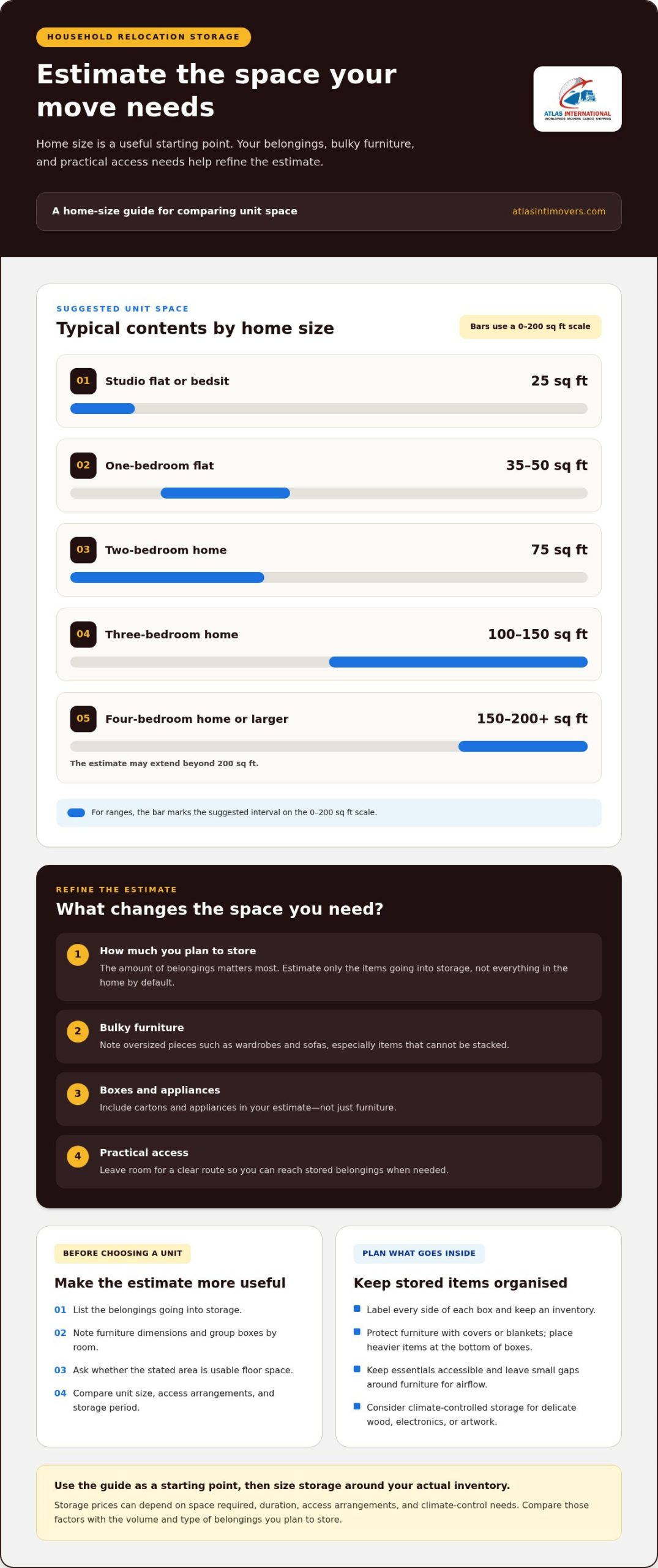
A move doesn’t have to happen all at once. Household storage during relocation can bridge the gap when your new home isn’t ready, and the right unit size depends mainly on how much of your home’s contents you need to store. As a guide, a studio may fit in 25 sq ft, a one-bedroom flat in 35-50 sq ft, a two-bedroom home in 75 sq ft, and a three-bedroom home in 100-150 sq ft; a four-bedroom home may need 150-200 sq ft or more.
It’s understandable to want your belongings organised and protected while move dates, access or renovation work affect your plans. Household storage during relocation can also let you move in stages instead of transferring everything at once.
This guide explains when storage can ease a move in the UAE, how to estimate the space you need, and how packing and access affect your choices. It also covers coordinating storage with removal and transport, helping you plan each stage from collection to delivery.
Key Takeaways
- Use temporary storage to bridge gaps between move-out and move-in dates, renovations, or a gradual transition into your new home.
- Estimate unit size from the belongings you plan to store, including bulky furniture, and leave room for practical access.
- Protect furniture, label boxes clearly, and keep an inventory so stored items are easier to locate and handle.
- Declutter before moving day and separate essentials from items that can stay in storage while you settle in.
- Coordinate removal, storage, and transport around your move dates, especially when an international shipment schedule affects delivery.
How Can Self-Storage Help When Moving Houses?
Storage can bridge the gap when your UAE move-out date arrives before your new home is ready. It also keeps selected belongings clear of renovation work while you manage access and delivery.
Accessing Stored Belongings
Flexible access lets you retrieve selected belongings as your move progresses instead of unpacking everything at once. It matters when a lease, renovation or delivery date changes. Keep items you’ll need soon near the front and leave a clear aisle. Label each box by room and contents so you can find essentials without searching through furniture or opening several cartons.
Before storing anything, make a short access list: daily-use items, work equipment, and pieces needed for the first night. Keep legal and mortgage documents, bank statements, and proof of residence with you. An employer arranging a staff move can align storage timing with corporate relocation planning.
Storage Materials for Household Belongings
Protective covers, blankets and suitable boxes help prepare household belongings for storage. Furniture edges, delicate surfaces and loose parts need different handling: wrap furniture in covers or blankets, put heavier items at the bottom of boxes, and leave small gaps around furniture for airflow.
Label every side of each box and keep an inventory describing its contents and destination room. For example, mark a carton “kitchen, cups” rather than “miscellaneous.” If stored items include delicate wood, electronics, or artwork, some facilities offer climate-controlled storage. Match the materials and storage conditions to the items, rather than treating every box alike.
Storage Prices and Relocation Risks
Storage prices in Dubai, Abu Dhabi, and other UAE cities depend on the space required, storage duration, access arrangements, and any climate-control needs. Compare these factors against the volume and type of belongings, rather than choosing by city name alone.
The main relocation risks are damage from poor packing, difficulty finding essentials and blocked access to items you need. Keep an inventory, protect furniture and plan a clear route through stored boxes. Storage units aren’t sleeping spaces and shouldn’t hold dangerous items.
Renovation is another practical reason to store belongings. Moving furniture and electronics away from work areas can help keep them clear during painting or redecoration. Separate items that must remain accessible from those that can stay in storage until the work is finished. This makes delivery decisions easier if room access changes during the project.
Timing matters, too. Moving large furniture and other non-essential items into storage before moving day can reduce what needs to be transferred that day. Pack an essentials box separately with items such as chargers, basic kitchen supplies and a change of clothes. Keep it with you, not behind boxes that may be hard to reach.
Use the storage period to move into your home gradually. Retrieve what each room needs first, then bring in less-used belongings as space becomes available. Checking labels and your inventory before each retrieval can prevent unnecessary searching and help keep the next delivery organised.
What size storage unit do I need for a house move?
Home size is a useful starting point, but the amount you plan to store matters most. Use the guide below, then adjust for bulky furniture, boxes and access needs.
Sizing a Unit by Home Size
A home-size guide estimates the space needed for typical household contents, helping you compare storage options before booking. It suggests 25 sq ft for a studio flat or bedsit, and 35-50 sq ft for a one-bedroom flat. A two-bedroom home may need 75 sq ft, while a three-bedroom home may require 100-150 sq ft. A four-bedroom home or larger may need a unit between 150 and 200 sq ft or more.
These figures are starting points, not a direct conversion from room count to unit size. A sparsely furnished two-bedroom home may need less space than one with large wardrobes, sofas and packed boxes. List the items going into storage and identify oversized pieces that cannot be stacked. Include boxes and appliances in your estimate, not just furniture.
For household storage during relocation, separate items going into storage from belongings moving directly to your new home. Storing a dining table, several cartons and seasonal items calls for a different estimate than storing nearly everything from every room. Use the relevant home-size range as a guide, then account for belongings that take up space inefficiently.
Comparing Storage Unit Sizes
Compare unit sizes by matching usable space to your inventory, rather than choosing by a facility’s label alone. Ask how the facility measures each unit and whether the stated area represents usable floor space. A simple floor plan can help: group boxes by room, note furniture dimensions and consider which items can safely sit above others.
When comparing storage facilities and contracts in the UAE, review the unit size, access arrangements, storage period and terms for extending or ending the booking. If delicate items need climate-controlled storage, check how the contract describes it. Make sure the written terms match the service you’re selecting.
A facility’s arrangements also affect how well it suits your move. Consider how you’ll reach your belongings and whether access arrangements fit your schedule. Some facilities offer climate-controlled storage for delicate wood, electronics or artwork. Base that decision on the items you’re storing instead of assuming every household needs controlled storage.
The right unit for household storage during relocation depends on your inventory and how long items may remain stored. Look for storage that is secure, flexible, and offers easy access; a storage and warehouse solution can help accommodate belongings while your move dates or new-home arrangements take shape.
Convenient packing and transport to storage
Good packing connects your household inventory with storage and onward transport. Separating stored items from belongings going directly to your new home reduces confusion during the move.
Packing Containers for Storage
Boxes and protective materials keep household items grouped and covered during storage. Choosing suitable containers matters because mixed, poorly packed loads can be harder to handle and identify later. Use boxes that suit their contents, and avoid making cartons so heavy that they’re difficult to lift.
Wrap furniture in covers or blankets before storing it, and protect corners that may rub against other items. Put heavier objects at the bottom of boxes, with lighter pieces above them. Leave small gaps around furniture for airflow instead of crowding every item together.
Pack by room or category. For example, keep kitchen utensils together and separate from bedroom linens. Mark each box with its contents and destination room, then keep fragile items apart from heavier cartons. This makes loading and unloading more orderly, especially when a shipment includes items for storage and direct delivery.
Storage Pods and Inventories
A storage pod is a container that can be packed with belongings, inventoried and delivered to a home or storage facility. Keeping the packed load together can simplify transport, rather than handling unrelated boxes separately. A provider may pack the belongings, prepare an inventory and arrange pod delivery.
An inventory links each carton or piece of furniture to its contents and intended destination. Write clear descriptions, such as “bedroom books” or “dining table,” instead of “miscellaneous.” Match each entry to a label on the item, and update the list when contents change. This helps you identify stored belongings without reopening every box.
Before packing a pod, separate items going into storage from those travelling directly to your new address. Keep the inventory with your move documents and group items by delivery destination. These decisions ease the pressure during loading and make it easier to direct each part of the shipment to the right place.
Making Room During Packing
Make room by clearing a defined packing and loading area before boxes begin to accumulate. A clear route helps people move cartons and furniture without repeatedly shifting packed items. Set aside one area for finished boxes and another for items still being packed, and keep doorways and walkways open.
Decluttering several weeks before putting a home on the market can help reduce what needs packing. Sort belongings into items for the new home, items for storage, and items you no longer plan to keep. Storing non-essential belongings can also make rooms look less crowded to prospective buyers.
Pack one room at a time, then move completed boxes to the designated storage area. Keep frequently needed belongings separate from the stored load and label them clearly. Before transport, compare packed items with your inventory so nothing intended for storage is left among belongings for direct delivery.
How do I organise storage when planning a move?
Start by matching each stored item to a move milestone: decluttering, pickup, temporary storage and delivery. Allow four to six weeks to plan a house move, then adjust the schedule as your move dates in the UAE become clearer.
Decluttering several weeks before putting a home on the market gives you time to sort belongings without packing everything at once. Divide items into three groups: take to the new home, store temporarily, or sell or donate. For example, keep daily-use kitchenware accessible while boxing books, spare chairs, and seasonal decorations.
Reducing visible belongings can make rooms look larger and less cluttered to prospective buyers. Move non-essential furniture and boxes out before photographs or viewings, while leaving enough useful pieces to show how each room works. Keep a written list of stored items so you can find them if a buyer’s visit or renovation changes your schedule.
Downsizing calls for a different sorting approach. A smaller home may not have space for every bookcase, side table or spare mattress, but you may need time to decide what to sell, donate or keep. Self storage can hold items that won’t fit while you compare them with your new home’s layout. Group undecided belongings together instead of mixing them with items you’ll need right away.
Pickup, storage and delivery work best as linked dates on one move calendar. Schedule pickup after sorting and packing, cover the gap between addresses with storage, and arrange delivery once your new home is accessible. If an international shipment needs extra time, include that transition in the storage period instead of planning delivery around an earlier estimate.
- Before pickup: Separate items for storage from belongings travelling directly to your new home.
- At collection: Match the inventory to the packed items and note their destination.
- During storage: Keep essentials and important documents with you, not inside the stored load.
- For delivery: Prioritise furniture and boxes needed to make the new home usable.
If dates change during a move in the UAE, revisit the calendar whenever a lease, handover or renovation milestone shifts. Update the inventory and delivery order at the same time. That way, your storage plan reflects the current move, not an earlier set of decisions.
Combining removal and storage services
Combining removal and storage links collection, temporary holding, and final delivery into one moving plan. It is especially helpful when a UAE home handover, renovation, or international shipping schedule doesn’t line up with your move-out date.
Choose self-storage if you want to manage packing, transport and access yourself. Full-service storage suits a move where you want help coordinating collection, storage and later delivery.
The practical choice depends on what you need to manage. With self-storage, you decide how items are packed, transported and retrieved, which suits a household able to make separate arrangements. Full-service support can reduce the moving parts when furniture must leave before your new home is accessible. Either way, match the storage period to your actual move dates.
Build one timeline around three milestones: collection from your current home, the storage period and delivery to your next address. For example, if renovation delays access to a bedroom, store its furniture while moving essential kitchen items directly. If an international shipment needs extra time, build the storage period into the relocation plan instead of treating it as a separate task.
A shared inventory links each milestone. Give every item a destination, such as “storage, later delivery” or “new home, direct delivery.” Add notes for bulky pieces, fragile items and belongings needed soon after arrival. This makes it easier to decide what should travel together and what needs to remain accessible during the transition.
Plan how collection and delivery fit with storage. Key details include where belongings are picked up, how the inventory stays with the load, and how delivery timing relates to access at your new home. Put these decisions on the same schedule. Separate arrangements can create pressure if a delivery date shifts while stored items are still expected elsewhere.
Flexible storage is useful when there’s a known gap in your move but the end date is uncertain. A lease start, renovation completion or shipping schedule may change, so plan how you’ll extend storage or revise delivery dates. Keep essential documents and immediate-use belongings outside the stored load, and make sure household members coordinating separate parts of the move can access the inventory.
For a household move that needs one plan for storage and later retrieval, explore storage and warehouse options. A coordinated arrangement can help keep pickup, temporary storage, and delivery connected, while leaving you to focus on decisions about the new home.
Atlas International Movers & Cargo Shipping: International Moving
Atlas International Movers & Cargo Shipping provides international moving for households relocating from the UAE to another country. If your move-out date and overseas delivery schedule don’t align, storage can help bridge the gap while you coordinate the next stage.
Our international moving service helps organise the move so your belongings can seamlessly cross borders and arrive safely and securely. Air Cargo and Sea Cargo offer different transport options, while the right choice depends on your shipment and timing. For a move within the UAE, Domestic Moving may be the relevant service instead.
Explore our international moving service to see how it fits your relocation plans. Contact Atlas International Movers & Cargo Shipping to discuss your move, or visit atlasintlmovers.com.
Plan the Next Stage with Confidence
Your move plan should remain workable as handover dates and delivery arrangements evolve. Treat storage as a flexible part of the transition, not a decision made once and forgotten. A well-planned approach to household storage during relocation gives you room to adjust while keeping the next steps clear.
Before confirming the next stage, bring your dates and priorities together. Decide which belongings must reach your new home first and which can wait until access is straightforward. Clear decisions make the move easier to coordinate, especially when you’re balancing a departure, temporary storage and a new start.
For practical support with your relocation plans, contact Atlas International Movers & Cargo Shipping. A considered plan can make the transition feel more manageable and leave you ready to settle into your next home.
Frequently Asked Questions
How do I prepare furniture for storage before moving?
Prepare furniture by making removable parts easy to identify and handle. Photograph a table or bed before taking it apart, then put its screws and fittings in a labelled bag secured to the corresponding item. Keep cushions and detachable shelves with their furniture. These records make reassembly easier after delivery, particularly if you’re storing several similar pieces during the same move.
Can I access my belongings while they are in storage?
Access depends on the facility’s arrangements and the terms for your unit. Before storing belongings, consider whether you may need to retrieve individual items between collection and delivery. For example, if you expect to retrieve a child’s study materials before the move is complete, record where the box is and plan the retrieval around the facility’s access process.
Can I rent month-to-month or do I have to commit to a lease?
The rental period depends on the storage agreement. Some arrangements may have a minimum commitment, while others may allow a shorter term. Read the terms for the billing period, renewal process, notice required to end the agreement and how extensions work. Match those conditions to your expected move dates, especially if a home handover or renovation schedule could change.
What Does & Doesn’t Go in Short-Term Storage?
Short-term storage is useful for household items you won’t need between homes, such as spare furniture, boxed books or hobby equipment. It can also hold belongings while you settle into a smaller property or complete renovation work. Keep daily essentials out of storage so you can use them without retrieving several boxes during the transition.
What cannot be stored in a storage unit?
Storage units cannot be used as sleeping spaces or for storing dangerous items. Keep ordinary household belongings separate from anything that may fall into a dangerous category under the facility’s conditions. When sorting mixed household contents, set aside questionable items before packing rather than sealing them in a carton where they may be overlooked.
What household items should be put in storage during a relocation?
Store belongings you won’t need before your new home is ready or that would obstruct work there. Examples include a spare desk, duplicate kitchen equipment or hobby supplies you can do without during the move. If you’re downsizing, storage can also hold furniture that may not fit while you decide whether to keep, sell or donate it.
How do I choose the right storage unit size for a household move?
Use the home-size guide earlier in the article as a starting point, then base your choice on the actual items going into storage. Separate the inventory into large furniture, appliances and cartons, and account for pieces that cannot be stacked. A household storing selected rooms needs a different estimate from one putting nearly all its belongings into storage.
How should I pack furniture and household goods for storage?
Pack household goods so each item can be identified and handled without disturbing the rest of the load. Photograph furniture before taking it apart, and keep matching fittings with the correct piece. Group smaller components by item instead of combining hardware from several shelves or beds. Leave enough room in cartons to close them securely without crushing their contents.