

The biggest logistics name isn’t automatically the best fit for every UAE sea shipment. A suitable sea freight logistics provider in the UAE should match your cargo and route, coordinate carrier bookings and paperwork, and plan customs documentation and delivery. Sea freight generally suits bulk or large shipments when a longer transit time is acceptable.
Choosing a provider can feel complex when port coverage, customs steps and shipment size all affect the plan. The right fit brings these moving parts together, so you can understand how your cargo will be handled from booking through delivery.
This guide explains how to assess providers, what freight forwarders can coordinate for customs clearance, and how to compare Dubai and Abu Dhabi coverage. It also covers when consolidated shipping may suit your cargo and what information helps shape a practical shipping plan.
Key Takeaways
- Assess providers by how well their carrier bookings, paperwork coordination and delivery planning fit your shipment and route.
- Understand how full container load and less-than-container load options differ to plan around cargo volume and consolidation needs.
- Compare Dubai and Abu Dhabi coverage based on the ports and delivery points relevant to your shipment.
- Learn what a freight forwarder can coordinate for customs clearance, including forms and shipment planning.
- Explore how combining compatible cargo can help make better use of container space, while timing and handling needs shape the plan.
What are the best logistics and freight forwarding companies in UAE?
The best fit depends on your cargo, route, delivery needs and required support. Compare how each UAE provider coordinates bookings, paperwork, warehousing and delivery, rather than relying on company size alone.
Comparing UAE Freight Forwarders
Compare UAE logistics companies by the services they coordinate along your shipment’s route. A freight forwarder books cargo space, coordinates with carriers and handles paperwork. For example, a shipment routed through Dubai may need port coordination, document handling and onward delivery planned together.
Look at route coverage, cargo-handling options and how clearly each provider explains the shipping plan. Warehousing can matter when cargo needs to wait before dispatch or delivery. An integrated service can simplify handovers between transport, storage and paperwork, but the right combination depends on the shipment.
Choosing a Freight Forwarder
Start with the cargo’s dimensions, handling needs, origin and destination. Then compare the proposed route, carrier-booking process, document coordination and delivery arrangements. A reliable provider should explain which parts it coordinates and how carrier or port operations affect the plan.
Ask for a clearly itemised quotation that separates transport charges from surcharges and port fees. Check that the proposed service matches your delivery requirements, including any warehousing or transfer arrangements. For example, a business shipment with a fixed receiving window needs a delivery plan that accounts for every handover.
Global and Local Provider Differences
Global freight forwarders can coordinate shipments across worldwide networks, while UAE providers may focus closely on origin-side arrangements and regional execution. Compare the actual route and destination coverage, not just a company’s global profile. DP World is headquartered at Jebel Ali in Dubai, a relevant name when assessing Dubai-linked logistics.
A freight forwarder books cargo space and coordinates carriers and paperwork. An NVOCC issues its own bills of lading and takes legal responsibility for shipments without owning ships or planes. These roles differ, so compare whether your shipment needs forwarding coordination or an NVOCC’s transport-document role.
Sea Freight Costs, Transit and Shipment Risks
UAE sea freight costs depend on cargo size, route, carrier space, handling needs, surcharges and port fees. Compare the quoted charge components, since terminal handling and additional services can affect the total shipment cost.
Transit times from UAE ports to global destinations vary by route, sailing schedule, transshipment and port conditions. A direct sailing and a route involving transfers follow different schedules, so the destination and service plan determine the expected duration.
Risks include cargo damage, delays, missed connections and documentation errors. Cargo insurance can provide financial protection subject to its terms, while shipment-tracking updates depend on the carrier and service arrangements. Review how status updates and claims are handled before confirming the plan.
Do freight forwarders handle customs clearance?
Freight forwarders can coordinate customs forms and shipment planning, but their role is distinct from the importer’s or exporter’s responsibilities. When specialized trade compliance or legal entry status is required, international trade specialists such as Global4PL manage importer and exporter of record obligations. For UAE imports and exports, applicable customs and maritime requirements depend on the cargo, route and shipment details. A forwarder helps coordinate paperwork and carrier arrangements.
Full Container Load and Consolidated Shipments
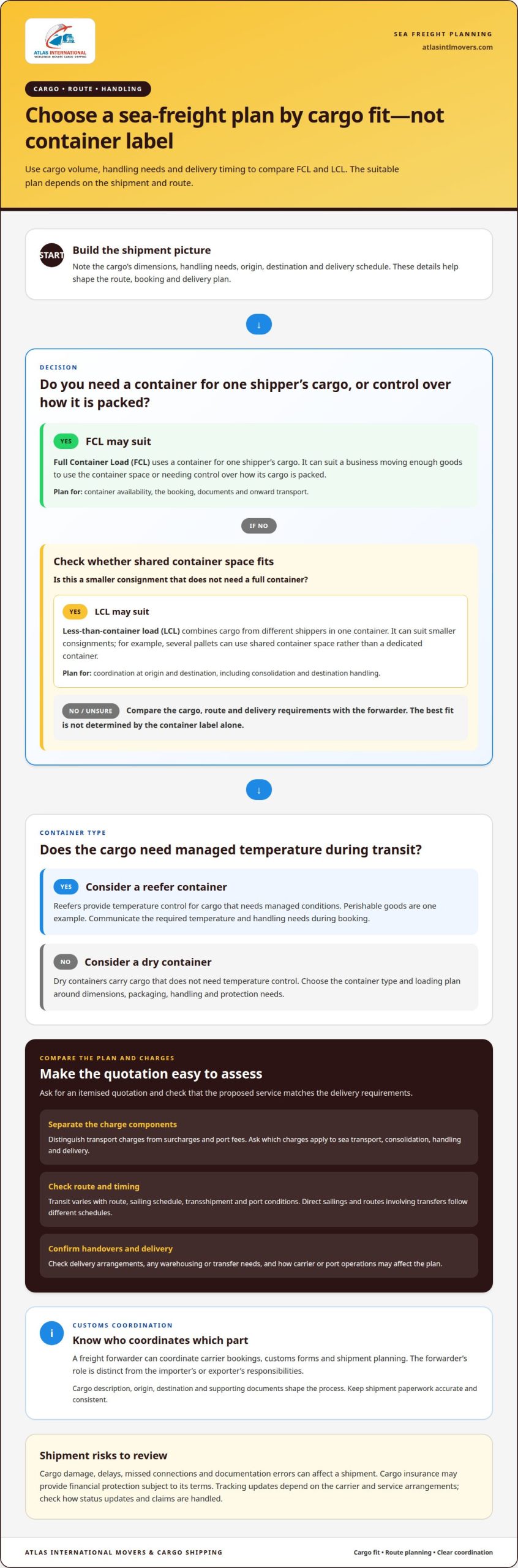
Full container load (FCL) means a shipment uses a container for one shipper’s cargo. It can suit a business moving enough goods to use the container space or needing control over how its cargo is packed. The forwarder coordinates the booking, documents and delivery plan.
Less-than-container load (LCL) combines cargo from different shippers in one container. It can suit smaller consignments that do not need a full container. For example, a business sending several pallets can use shared container space rather than arrange a dedicated container. Consolidation requires coordination at origin and destination.
Choosing Between FCL and LCL
Compare the shipment’s volume, handling needs and delivery schedule. FCL provides a container for one shipper’s cargo, while LCL depends on combining compatible shipments and coordinating their movements. The most suitable option depends on the cargo and route, not simply the container label.
Ask the forwarder to explain which charges relate to sea transport and which apply to consolidation, handling or delivery. A clear breakdown helps you compare freight services on a like-for-like basis. For LCL, include consolidation and destination handling in the plan; for FCL, consider container availability and onward transport.
Temperature-Controlled and Other Container Types
Reefer containers provide temperature control for cargo that needs managed conditions during transit. Perishable goods are one example, but the required temperature and handling depend on the cargo. Communicate those needs clearly during booking so the carrier plan and shipment documents align.
Dry containers carry cargo that does not need temperature control. Select a container type based on the cargo’s dimensions, packaging, handling requirements and protection needs. For example, boxed household goods and packaged commercial products may need different loading plans, even when both travel in dry containers.
Customs Paperwork and Rate Factors
For customs coordination, a forwarder can help organise carrier bookings, customs forms and delivery plans. The shipment’s description, origin, destination and supporting documents shape the process. Accurate, consistent paperwork helps reduce avoidable delays, while applicable UAE import, export and maritime requirements depend on the shipment.
Typical sea freight rates from the UAE vary by container size, destination, carrier space, surcharges and port fees. The price depends on the case and is given after a quote request, with cargo details, route and handling needs shaping the quote. For a shipment requiring coordinated sea transport, explore sea cargo services.
Logistics providers operating in Dubai and Abu Dhabi
Dubai and Abu Dhabi each provide port options for UAE sea freight. Jebel Ali Port is in Dubai, and Khalifa Port is in Abu Dhabi. The suitable choice depends on the sailing, cargo handling and inland delivery plan.
Match the Port to the Shipment
Start by mapping the cargo’s origin, destination and final delivery point. A shipment collected in Dubai may need a different inland transport plan from one collected in Abu Dhabi. The port name alone does not determine the best route.
For Dubai, Jebel Ali is a key logistics reference point. DP World is headquartered there. For Abu Dhabi, include Khalifa Port in the route comparison, then assess whether its sailing and handling plan fits the cargo’s destination.
Port capabilities matter at the shipment level. Compare the service available for the cargo type, container arrangement, carrier schedule and required onward transport. For example, a container destined for an Abu Dhabi warehouse needs a delivery plan that accounts for the port-to-warehouse leg, not just the sea crossing.
Coordinate Local Operations
A freight forwarder can connect carrier bookings, customs forms and delivery plans. In practice, the sequence is straightforward: establish the cargo details and route, coordinate the booking and paperwork, then arrange inland transport. Each handover affects the wider supply chain.
Customs coordination also needs to align with the selected port and shipment documents. A mismatch between cargo descriptions, paperwork and the booking can complicate operations. A clear process assigns responsibility for each document and handover, from the UAE origin point to the receiving location.
For example, a business shipping goods from an Abu Dhabi site to an overseas customer should consider collection, port access, carrier timing and destination delivery together. A shipment originating in Dubai needs the same joined-up planning, even when Jebel Ali is the selected port.
Compare Providers by Route Coverage
Compare companies by the route they can coordinate, not by their address alone. A global network can support worldwide connections, while local expertise can help organise origin-side details. The useful measure is whether those capabilities connect into one workable shipment plan.
Use a consistent comparison for each proposed route: port, carrier booking, customs paperwork, inland transport and delivery arrangements. This helps distinguish an integrated plan from separate services with unclear handovers. A provider should make the proposed sequence understandable before the cargo moves.
When port options appear similar, assess the full journey. Compare the cargo’s collection point, sailing plan, destination and final transport requirements. This route-based approach helps businesses select UAE operations that serve the shipment, rather than choosing a location or company name in isolation.
Shipment consolidation and optimisation
Consolidation planning starts with shipment details, not container space alone. A forwarder groups cargo by destination, dispatch readiness, dimensions and handling needs. For example, goods bound for one receiving point may suit a shared shipment more readily than cargo with different delivery dates. A comprehensive plan also accounts for collection, transfer, clearance and final delivery.
Build a Consolidation Plan
First, record each shipment’s origin, destination, package count, dimensions and cargo description. Then group consignments that can move on compatible schedules and through a shared transport network. If one consignment is not ready, planners can assess whether it should move separately or wait for another shipment. The decision depends on timing and handling requirements.
Next, map each handover from collection to destination. This includes receiving cargo, preparing it for consolidation, coordinating the carrier booking and arranging delivery after arrival. For example, a shipment moving from a UAE warehouse to an overseas distribution point needs a plan that connects warehouse release with the sailing schedule.
Protect Cargo During Handling
Compatible cargo is not only cargo with the same destination. Planners also consider packaging, dimensions, weight distribution and special handling instructions. Fragile cartons may need separation from dense or irregular goods. Clear labels and a cargo list help teams identify each consignment during loading, transfer and destination handling.
Different delivery deadlines can complicate consolidation. If one shipment must arrive before another is ready, holding both together may disrupt the plan. The forwarder can compare separate dispatch with a shared movement, considering storage, additional handling and the receiving schedule. The best choice balances cargo readiness with the complete route.
Coordinate Documents and Clearance
Each consignment needs accurate shipment details within the consolidated movement. The cargo description, consignee and destination information should remain consistent across the relevant paperwork. The forwarder coordinates customs forms and carrier documents, while the shipment plan accounts for clearance and delivery after arrival. Clear records help teams distinguish each owner’s cargo within a shared load.
Before dispatch, planners can reconcile the cargo list against received packages, confirm which shipments are included and align the booking with the expected cargo. If a package count or destination changes, the consolidated plan and documents may need updating. This step reduces confusion at handovers without replacing the applicable customs process.
Optimise Space and Schedule
Space planning considers package dimensions and the loading sequence, not volume alone. Grouping cargo with compatible shapes can make container space more practical to use. At the same time, planners preserve access for unloading and avoid arrangements that conflict with cargo-handling needs.
For UAE shipments, compare the consolidation point, sailing plan and destination network as one connected route. A shipment destined for a regional warehouse may need a different delivery sequence from one heading to a final customer. Review cargo readiness, handling, clearance and delivery together. These steps help identify a workable consolidation plan without treating container utilisation as the only objective.
Which sea freight companies operate in the UAE?
UAE sea freight involves several roles, so distinguish port operators, ocean carriers, freight forwarders and NVOCCs. DP World is headquartered at Jebel Ali in Dubai. A freight forwarder books cargo space, coordinates with carriers and handles paperwork, while an NVOCC issues its own bills of lading and takes legal responsibility for shipments without owning ships or planes. A sea freight logistics provider in the UAE may coordinate some of these shipment stages, so identify its role before comparing services.
Understand the Different Company Roles
A port operator and a freight forwarder perform different functions. DP World’s Jebel Ali connection identifies a logistics name in Dubai, but it does not by itself establish who books your cargo or coordinates its paperwork. Identify the company responsible for each part of the proposed shipment.
Ocean carriers provide vessel transport, while freight forwarders coordinate cargo movement with those carriers. An NVOCC has a distinct role through its own bill of lading and legal responsibility for shipments. These differences matter when comparing proposals: the company handling documents may not own or operate the vessel.
Compare Coverage and Shipment Coordination
For a shipment originating in Dubai or Abu Dhabi, compare origin arrangements, carrier booking, paperwork coordination and delivery planning. A provider’s office location alone doesn’t show whether it can coordinate your cargo’s route. Map the shipment from collection through port departure and onward delivery before comparing services.
For example, a business shipping goods to an overseas buyer needs a defined sequence for collection, booking, documents and delivery. A shipment originating elsewhere in the UAE needs the same role clarity. Assess a sea freight logistics provider in the UAE by the route and shipment coordination it can arrange, not by its name alone.
Build a Practical UAE Shortlist
Use the same comparison points for every company under consideration. Record the route, cargo type, container arrangement, paperwork coordination, delivery scope and party responsible for carrier booking. This creates a like-for-like view without treating a global network or presence in one city as proof of route suitability.
- Role: Identify whether the company is a carrier, forwarder, NVOCC or port operator.
- Route: Match proposed bookings and handovers to the UAE origin and destination.
- Documents: Clarify who coordinates shipment paperwork and customs forms.
- Delivery: Include planned movement beyond the port in the shipment sequence.
Finally, review how each proposal explains responsibilities and handovers. A clear plan identifies who books the cargo, coordinates documents and arranges delivery. That practical detail helps distinguish companies operating in the UAE by the work they perform, rather than by name or global reach.
Atlas International Movers & Cargo Shipping
Atlas International Movers & Cargo Shipping helps individuals and businesses plan cargo movements and relocations from the UAE. Our Sea Cargo and Air Cargo services give you options to consider when comparing shipment modes, while International Moving and Domestic Moving support relocation needs. Share the cargo type, origin, destination and preferred schedule so our team can understand the movement and its practical requirements.
Turn to us when you need a shipping plan connected to a wider move or cargo requirement. We can help make the arrangements clear and organised, so you can focus on your next steps.
For help planning your shipment, contact Atlas International Movers & Cargo Shipping.
Plan the Next Move with Confidence
Your next step is to turn shipment details into a workable plan. Choosing a sea freight logistics provider in the UAE is easier when you have a clear picture of the cargo, route, destination and delivery needs. These details help shape a conversation about the right transport mode and the coordination your shipment requires.
For a plan that connects shipping with a wider move, Atlas International Movers & Cargo Shipping offers International Moving and Domestic Moving, as well as Air Cargo. Our team can help you consider how these services fit your relocation or cargo requirements while keeping the shipment’s practical needs in view.
Bring your shipment or moving requirements together, and take the next step at a pace that suits your plans. Contact Atlas International Movers & Cargo Shipping to discuss your requirements. With a clear starting point, you can move forward with greater confidence and keep your attention on what comes next.
Frequently Asked Questions
What are the frequently asked questions?
Common questions focus on choosing a provider, selecting a shipping arrangement, coordinating customs paperwork and estimating shipment costs. For example, a business planning an export may need to know whether its cargo suits a shared container and which shipment details to prepare. The answers below explain practical points to consider, helping you plan discussions with a UAE freight forwarder around your cargo and route.
What kind of shipping options can I expect?
Sea freight commonly offers full container load (FCL) and less-than-container load (LCL) arrangements. FCL suits cargo planned for a dedicated container, while LCL combines compatible consignments. Temperature-sensitive goods may require a reefer container. For urgent shipments or high-value items, air freight is an alternative to compare. The appropriate choice depends on cargo volume, handling needs, destination and delivery schedule.
What sea freight services do logistics providers in the UAE offer?
Freight forwarding services can include carrier booking, shipment paperwork coordination and delivery planning. Depending on the provider and route, arrangements may also connect cargo collection, consolidation or warehousing with sea transport. For example, a small consignment may need shared-container coordination, while a larger load may require a dedicated booking. Clarifying the requested scope helps identify which shipment stages the service covers.
How do UAE sea freight providers compare by service, coverage, and reliability?
Compare providers against the same route and shipment requirements. Consider their carrier-booking arrangements, destination coverage, paperwork coordination, delivery planning and shipment-update process. A provider with worldwide reach may suit a multi-country supply chain; another may better fit a route requiring close coordination at the UAE end. For example, compare how each proposal handles a change in cargo readiness or delivery timing.
What documents and customs procedures are required for sea freight shipments in the UAE?
Document needs depend on the shipment, cargo and destination. The forwarder can coordinate customs forms and carrier paperwork using details such as cargo descriptions, shipper and consignee information, and destination. Keep information consistent across the documents provided for booking. For example, a revised cargo description should be reflected in the shipment paperwork so the planned movement and documents stay aligned.
How can businesses choose and get a quote from a UAE sea freight provider?
Provide the origin, destination, cargo description, dimensions, weight, shipment readiness and preferred delivery timing. These details help the provider assess the route, container arrangement, handling and related charges. Compare quotations by scope, including carrier booking, paperwork coordination and onward delivery, rather than looking at a headline charge alone. For a more useful estimate, explain any consolidation or temperature-control needs from the outset.