

What if the best storage option isn’t the largest or closest, but the one that suits what you’re storing and what happens next? Choosing storage solutions in the UAE means weighing space, duration, access, and the care your household goods or business inventory need.
Before committing, get clear on how much you need to store, how long you may need storage, how access works, and what handling is included. The aim is to find an arrangement that fits your plans without adding uncertainty.
This guide compares household and business storage needs, explains what to clarify with a provider, and shows how storage can fit into a relocation or operational plan. Atlas provides storage and warehouse solutions alongside moving and corporate relocation services, so you can consider storage as part of a wider plan. Use the questions below to compare options and decide what to do next.
Key Takeaways
- Choose storage solutions based on what you need to store, how often you’ll need access, and how long storage may be required.
- Compare household belongings, business inventory, and office equipment before estimating space or planning retrieval.
- Before committing, clarify access arrangements, accepted items, packing requirements, and which services are included.
- A clear inventory, sorting, labels, and a retrieval plan can help keep belongings or stock organized in storage.
- Atlas provides short-term and long-term storage for household goods and inventory, which can be considered alongside moving or corporate relocation plans.
When do storage solutions make sense for households and businesses?
Storage can help when a move-out date comes before your new home is ready, or when business inventory needs to wait before it can be used. It keeps belongings or stock together while you arrange what comes next. The right storage solutions depend on what you’re storing, how often you need access, and how long items may need to remain in storage.
Households often store furniture and personal belongings during a home transition, especially when some items won’t be needed right away. Businesses may need space for inventory or office equipment during a change in premises or operations. A self-storage facility is one familiar storage model, but the right arrangement depends on the provider’s services and the access you need. Confirm those details before deciding.
For a practical look at making more room at home, watch this video:
Which life and business situations call for storage?
For households, storage may help when moving dates don’t align, during a home transition, or when there isn’t enough room to keep everything on site. Short-term storage can bridge a specific gap; longer-term storage may suit belongings or inventory that won’t be needed for an extended period. First, estimate when you’ll need the items again, then check whether the provider can accommodate that timeframe.
For businesses, inventory may need to be held between arrival and use, while office equipment may need a temporary place during a premises change. Consider how often items will be retrieved. Equipment needed regularly calls for a different access plan from goods that can stay stored until a later stage. For office moves, sequencing equipment around setup can support planning for Minimal disruption and downtime.
How can storage support a move or relocation?
Storage can separate packing, transit, and delivery planning. Instead of arranging for every item to arrive at the new home or workplace at once, decide which belongings are needed first and which can be stored until the next step is ready. Confirm access arrangements and any item-specific requirements with the provider before setting your schedule.
Atlas provides short-term and long-term storage for household goods and inventory management, alongside relocation services. Review our storage and warehouse solutions and consider storage as part of an international moving plan. For an international relocation, clarify when items will be stored, how storage fits with transit, and when you’ll need them again. Planning these steps can help keep a household transition Stress-free and organized.
What should you compare when evaluating storage solutions?
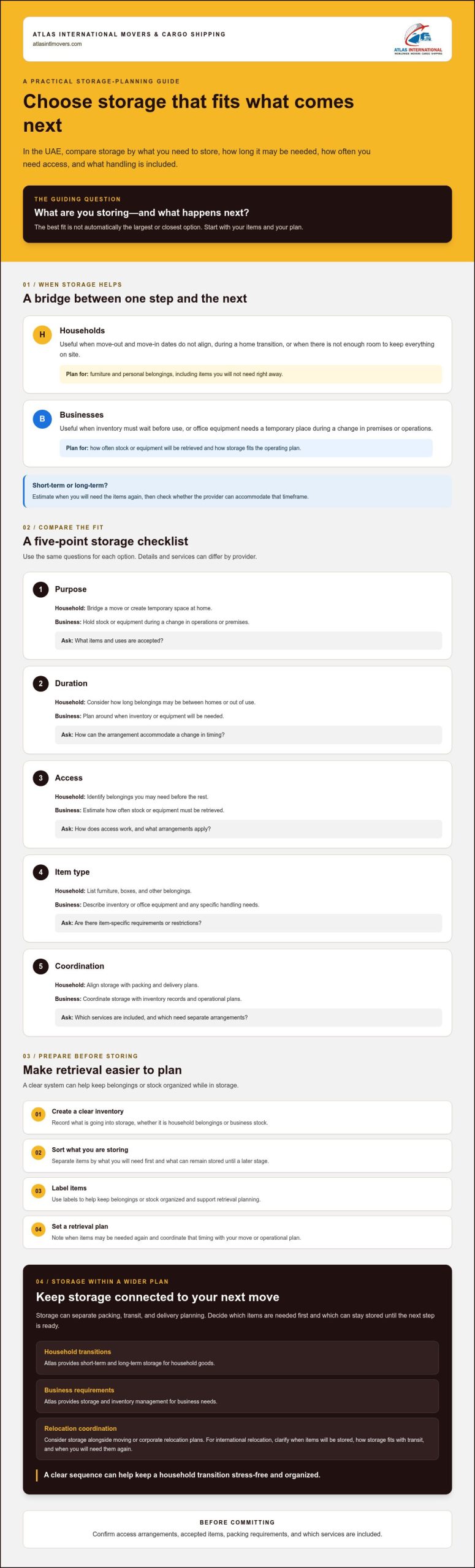
Use a consistent checklist when comparing options: purpose, duration, access, item type, and service scope. This makes it easier to see whether an arrangement fits your household move or business needs. Don’t assume that every facility provides the same features or support.
| Compare | Household goods | Business inventory or office equipment | Clarify with the provider |
|---|---|---|---|
| Purpose | Bridge a move or create temporary space at home. | Hold stock or equipment during a change in operations or premises. | What items and uses are accepted? |
| Duration | Consider how long belongings may be between homes or out of use. | Plan around when inventory or equipment will be needed. | How can the arrangement accommodate a change in timing? |
| Access | Identify belongings you may need before the rest. | Estimate how often stock or equipment must be retrieved. | How does access work, and what arrangements apply? |
| Item type | List furniture, boxes, and other belongings. | Describe inventory or office equipment and any specific handling needs. | Are there item-specific requirements or restrictions? |
| Coordination | Align storage with packing and delivery plans. | Coordinate storage with inventory records and operational plans. | Which services are included, and which need separate arrangements? |
Which questions clarify security, access, and flexibility?
Ask how access is arranged, whether it needs to be scheduled, and what happens if your plans change. Find out what measures are used to protect stored items, and assess the provider’s answers rather than assuming particular systems or safeguards are available. Atlas provides secure storage; confirm the specific security details and access arrangements that apply to your needs. For more guidance, see our secure storage guide for choosing a safe, flexible solution.
How should you assess the storage provider’s service scope?
Check whether transport, packing, inventory records, and item retrieval are included or require separate arrangements. For business stock, ask how items are identified and how retrieval requests are managed, if those services matter to your plan. For household storage, keep a list of priority belongings so they’re easier to identify when needed. Businesses planning stock levels may also find these inventory management techniques useful when deciding what to store and when it may be needed.
Atlas’s storage and warehouse solutions can be considered alongside household or inventory requirements. When comparing options, share details about the items, access needs, and next step so you can clarify which services fit your plans.
How do household and business storage needs differ?
A single storage plan rarely suits every item. Household belongings may stay untouched until a move is complete, while business inventory may require planned retrieval and office equipment may need to be available in sequence with a workplace transition. The useful distinction is how each item will be used, identified, and needed next, not simply whether it’s personal or commercial.
The Self Storage Association offers background on the self-storage industry. For your own decision, focus on the provider’s confirmed service scope and whether its arrangements fit the items you plan to store. Don’t assume all storage solutions include the same packing, handling, access, or retrieval support.
What should households consider before storing belongings?
Start with a simple item list. Note what’s fragile or bulky, what can stay packed, and what you may need soon after moving. Separate priority belongings from items that can remain in storage, and ask the provider about packing and handling before confirming the plan. Clear labels and a retrieval list can help you find essentials without unpacking everything. These steps can support a Stress-free and organized residential transition.
What should businesses consider for inventory or office equipment?
For inventory, identify items in a way that matches your records, then set retrieval priorities based on when goods are expected to be used. Ask whether inventory records or retrieval assistance are included, or whether your team should manage those tasks. For office equipment, consider which items are needed first to resume work and coordinate their storage and return with the wider relocation schedule.
Furniture and IT equipment may follow different timelines. Distinguish equipment needed for initial setup from items that can wait. Inventory may need to be retrieved in planned batches or only at a later stage. Confirm item-specific packing or handling requirements rather than assuming they’re included in the storage arrangement.
Atlas provides storage and warehouse solutions alongside corporate relocation services. Reviewing our corporate relocation services can help you consider how storage fits with your business move. Whatever you store, clarify the provider’s arrangements in advance so the plan is Secure, flexible, and easy access in practice.
How can you prepare belongings or inventory for storage?
A clear preparation process makes stored items easier to track and retrieve. Start by listing what you plan to store, then sort items by type and priority. Note anything fragile, bulky, or time-sensitive so you can discuss it with the provider before packing. Don’t assume packing, handling, or inventory-record services are included. Ask what’s available and what you’ll need to arrange yourself.
What information should you organize before storing items?
Build a practical list for your household goods or business inventory. Use clear item descriptions and mark belongings you may need sooner. Keep essential documents and frequently needed items with you, or clearly separate them from items going into storage. Label boxes with their contents and intended destination, and check with the provider about accepted items and packing requirements.
Use this checklist before arranging collection or delivery:
- Inventory: List items and identify fragile, bulky, or time-sensitive belongings.
- Sort: Separate items to store from those you’ll keep with you or need soon.
- Label: Mark boxes and note priority items for retrieval.
- Pack: Confirm suitable packing requirements with the provider before preparing items.
- Confirm: Check accepted items, access arrangements, responsibilities, and planned dates.
How can storage fit into a move or office transition?
Add storage milestones to the wider moving plan. Note when items are expected to go into storage, which belongings need to reach the new home or workplace first, and when you anticipate retrieving the rest. For a domestic move, reviewing the UAE domestic moving information can help you consider storage alongside relocation planning.
For an office transition, coordinate stored furniture and IT equipment with the setup sequence and timing of the move. Identify what the team will need to resume work, then confirm retrieval arrangements with the provider. Careful sequencing can support planning for Minimal disruption and downtime, but storage doesn’t replace an agreed relocation schedule.
Atlas provides storage and warehouse solutions for household goods and inventory management. When planning, consider how storage fits your requirements and the timing of your move. Setting out the details in advance can help keep the process Stress-free and organized.
How can Atlas storage solutions support your next move or business need?
A move or business change doesn’t always happen on a single schedule. Your new home may not be ready when belongings need to leave, or inventory may need to be stored before it’s required. Atlas provides short-term and long-term storage and warehouse solutions for household goods and inventory management, which you can consider while planning the next step.
What does Atlas provide for household goods and business inventory?
Atlas provides secure storage. The right arrangement depends on your items and plans, so confirm facility-specific details before committing. Ask how access is arranged, what handling or packing support is available, and whether inventory-management or retrieval services are included. These details can vary by requirement and shouldn’t be assumed.
For a household move, storage may form part of residential relocation planning when move-out and move-in dates don’t align. If you’re moving internationally, consider how belongings will be held before or after transit, and when you’ll need access to them. For a business, storage may support inventory management or fit into corporate relocation planning as furniture and equipment move between workspaces. Coordinating storage with the wider plan helps you identify what should be stored and what needs to be ready first.
What should you share when requesting storage guidance?
Clear information helps our team understand your requirements and discuss suitable next steps. Before making an enquiry, consider preparing:
- Item types: Describe whether you’re storing household goods, business inventory, or a mix.
- Approximate volume: Give a practical estimate of how much needs to be stored.
- Intended duration: Explain whether you expect short-term or long-term storage, even if your plans may change.
- Access needs: Identify items you may need to retrieve sooner or more often.
- Related plans: Share whether storage connects to a residential, international, or corporate relocation, or another business transition.
Before confirming arrangements, ask about access, accepted items, and any packing, handling, or inventory support you require. Agree these specifics with the provider rather than inferring them from a general service description. Discuss your storage requirements with Atlas to consider a practical next step for your household goods or inventory.
Plan Your Next Step with Confidence
The right storage choice starts with a clear view of what you’re storing, how often you may need access, and what comes next. Household belongings, business inventory, and office equipment can each call for different arrangements. Before committing, confirm access details and which services are included so your plan fits your move or operational needs.
Atlas provides short-term and long-term storage and warehouse solutions for household goods and inventory management. The company also offers residential moving, international moving, and corporate relocation services, so you can consider storage alongside a wider relocation plan.
When you enquire, share the type and approximate volume of items, your anticipated storage period, access needs, and any related move or business change. Discuss your storage requirements with Atlas and take a practical next step toward storage solutions that support your plans.
Frequently Asked Questions
What are storage solutions?
Storage solutions are arrangements for keeping belongings or goods in a designated place until they’re needed. They can support household moves, temporary space constraints, business inventory management, or office transitions. The suitable arrangement depends on what you’re storing, how long you expect to store it, how often you need access, and what services the provider offers. Confirm accepted items and access arrangements before making a commitment.
How do I choose the right storage solution?
Choose an arrangement that fits your items, access needs, expected duration, and next planned step. Make a list of what you’ll store, note bulky or fragile belongings, and identify anything you may need to retrieve early. Then ask providers about access, accepted items, security measures, packing requirements, and which services are included. Compare their answers rather than assuming facilities offer identical arrangements or support.
Is storage useful during an international move?
Yes. Storage can help if your move-out, transit, and move-in plans don’t align, or if some belongings won’t be needed immediately after arrival. Identify which items should travel directly and which may be stored for a later stage. If using storage alongside international moving, clarify timing, access, accepted items, and responsibilities with the provider so the plan fits your relocation schedule.
Can businesses use storage for inventory and office equipment?
Yes. Businesses may use storage for inventory awaiting use or sale, and for office equipment during a workplace transition. Plan separately for each: inventory may need clear identification and planned retrieval, while furniture and IT equipment may be needed according to the office setup sequence. Atlas provides storage and warehouse solutions for inventory management, alongside corporate relocation services. Confirm which records, handling, and retrieval arrangements are available.
How long can belongings stay in storage?
The available storage period depends on the provider’s terms and your requirements. Atlas offers short-term and long-term storage for household goods and inventory management, but confirm the arrangements that apply to your needs rather than assuming a fixed duration. When enquiring, explain your anticipated timeframe and whether it may change. Also ask how to discuss an extension or adjust the plan if your move or business timeline shifts.
What should I ask a storage provider before booking?
Ask what items are accepted, how access works, what measures protect stored goods, and whether packing, handling, inventory records, or retrieval support are included. Confirm facility-specific arrangements directly, including responsibilities, applicable terms, and how changes to your plans are handled. Share whether you’re storing household belongings, inventory, or office equipment. Clear answers help you compare providers and understand what you’ll need to arrange separately.
Can storage be arranged alongside a moving service?
Yes. Storage can be considered as part of a move, particularly if belongings need to be held between moving out and moving in. Atlas provides storage and warehouse solutions alongside domestic moving, international moving, and corporate relocation services. Discuss the items, approximate volume, expected duration, and access needs, as well as how storage fits the moving schedule. Confirm the specific service arrangements with the team before proceeding.